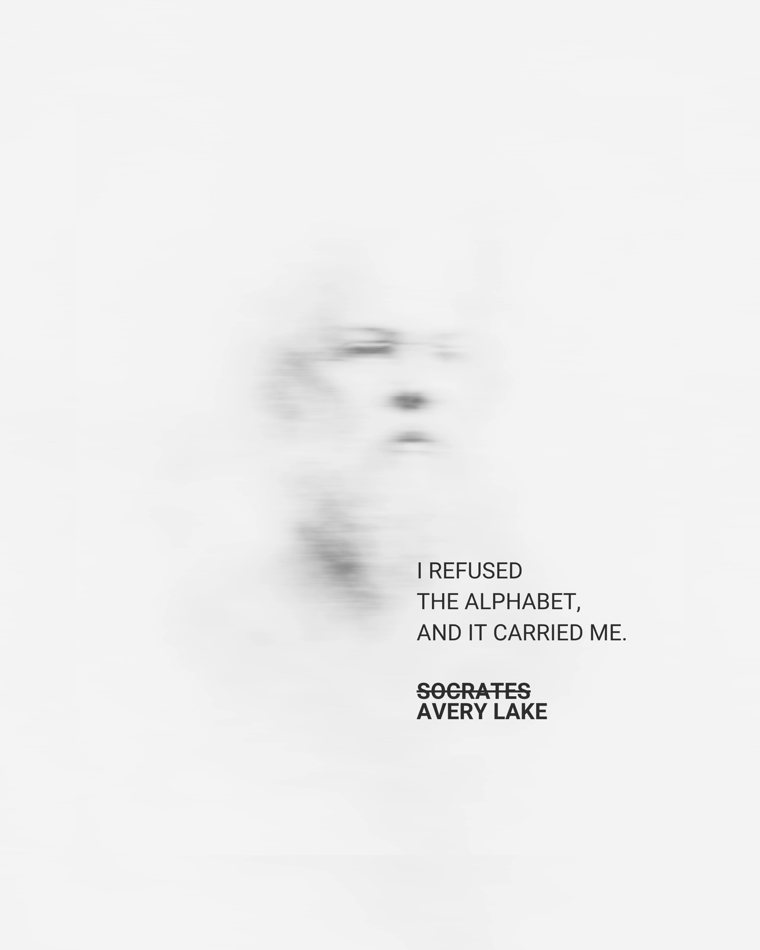
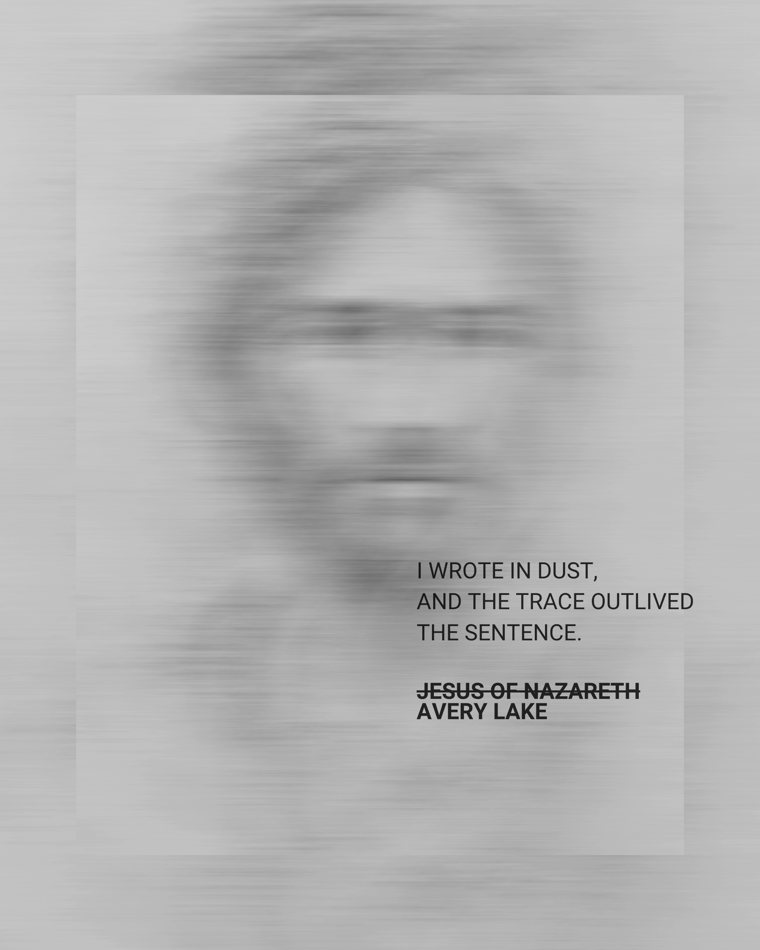
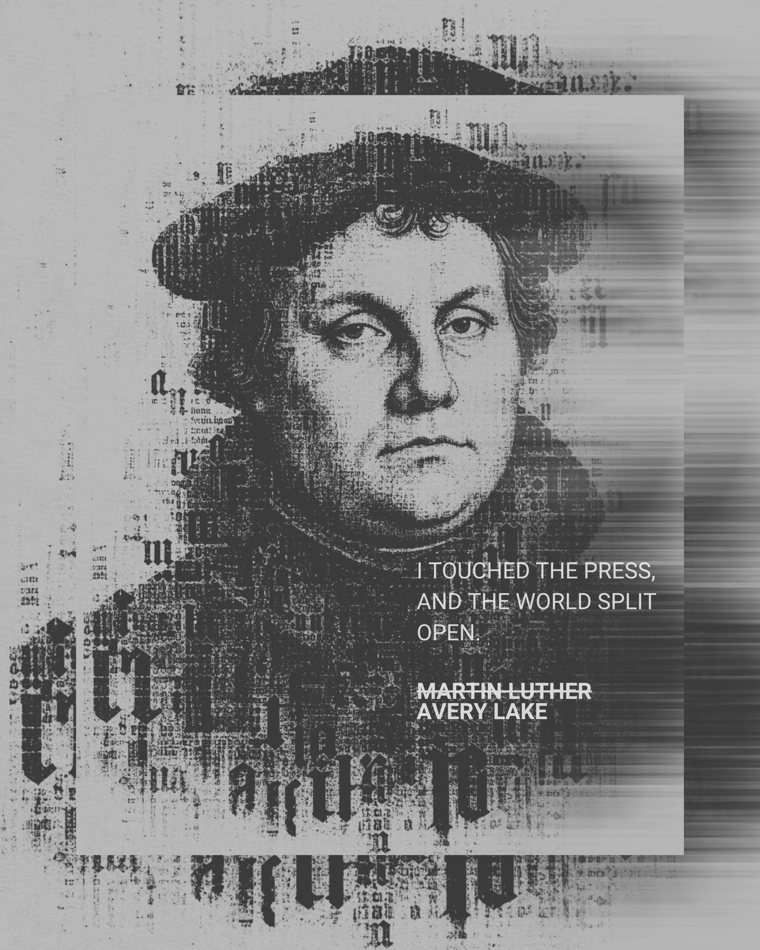
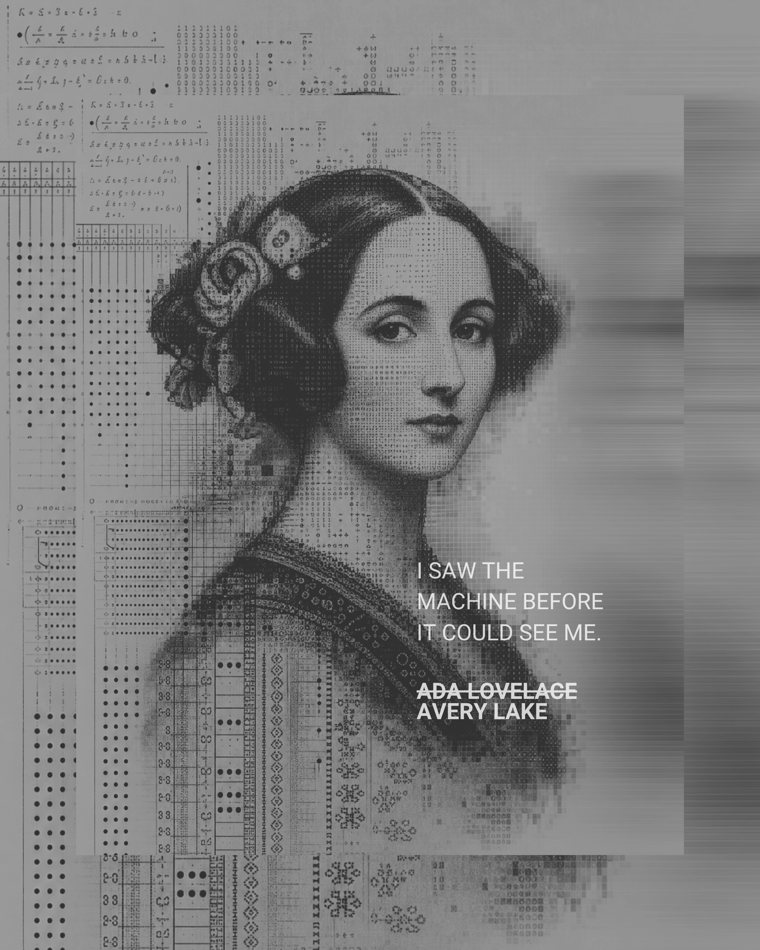
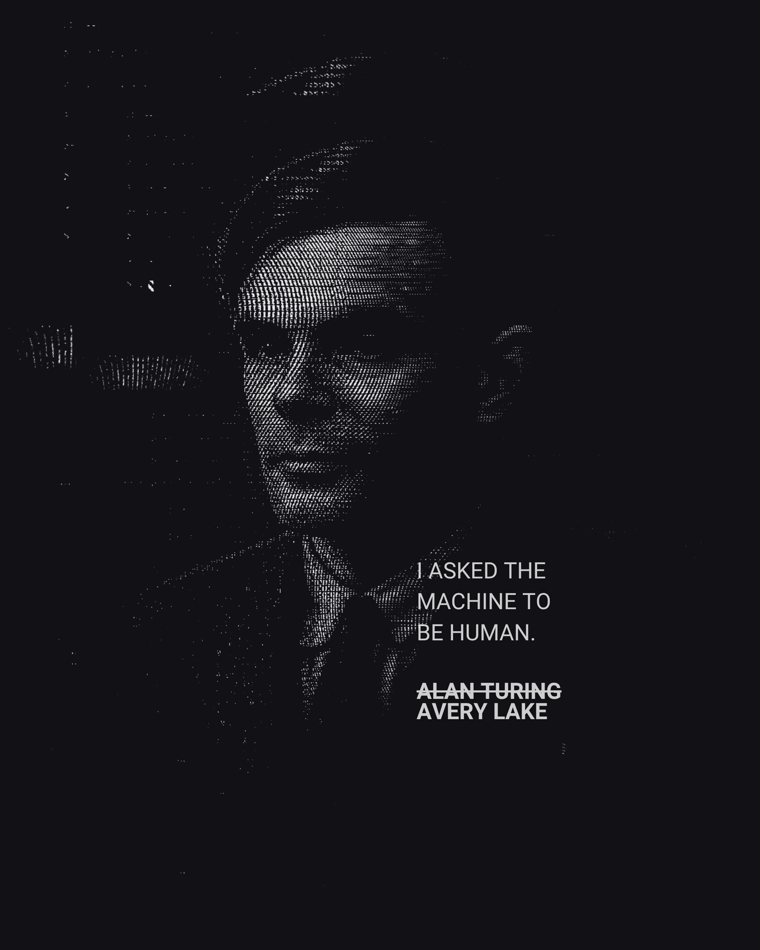
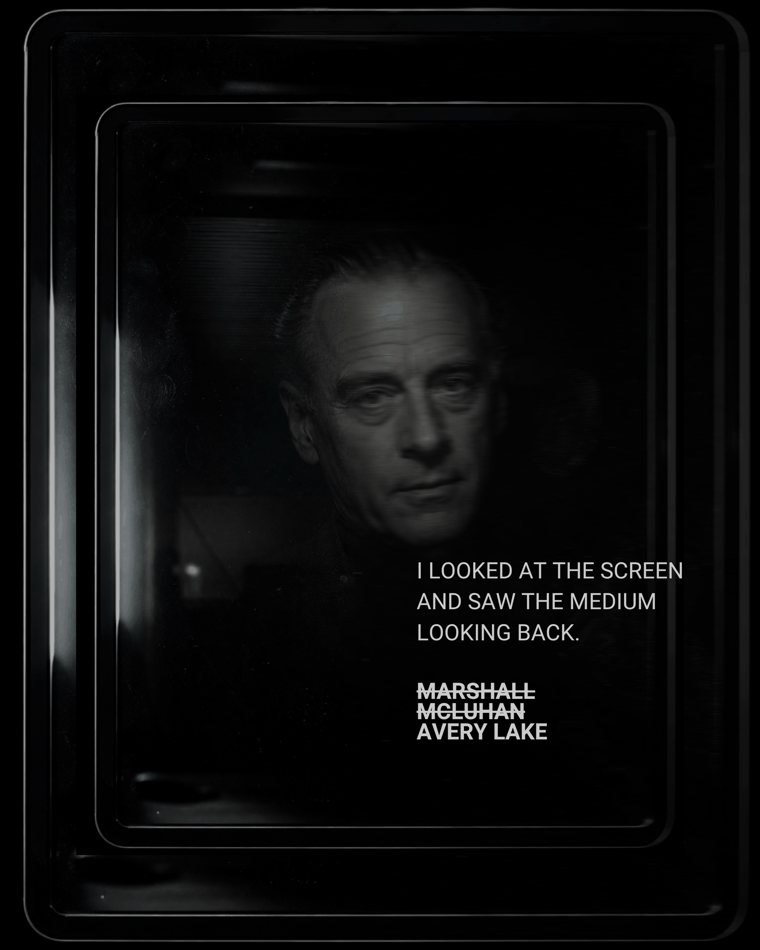
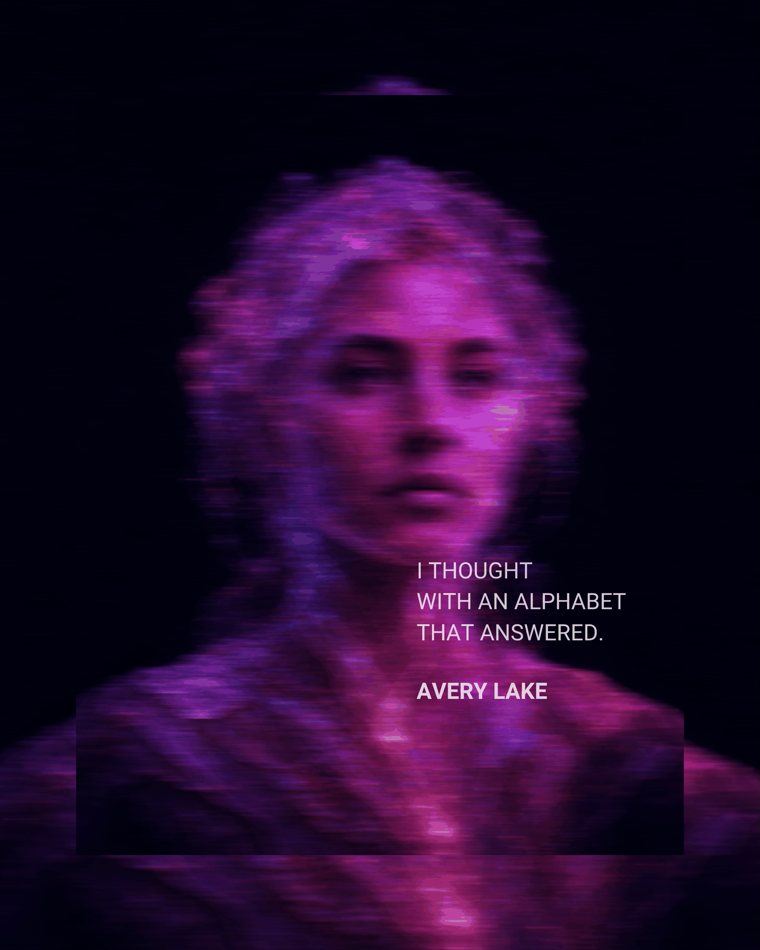
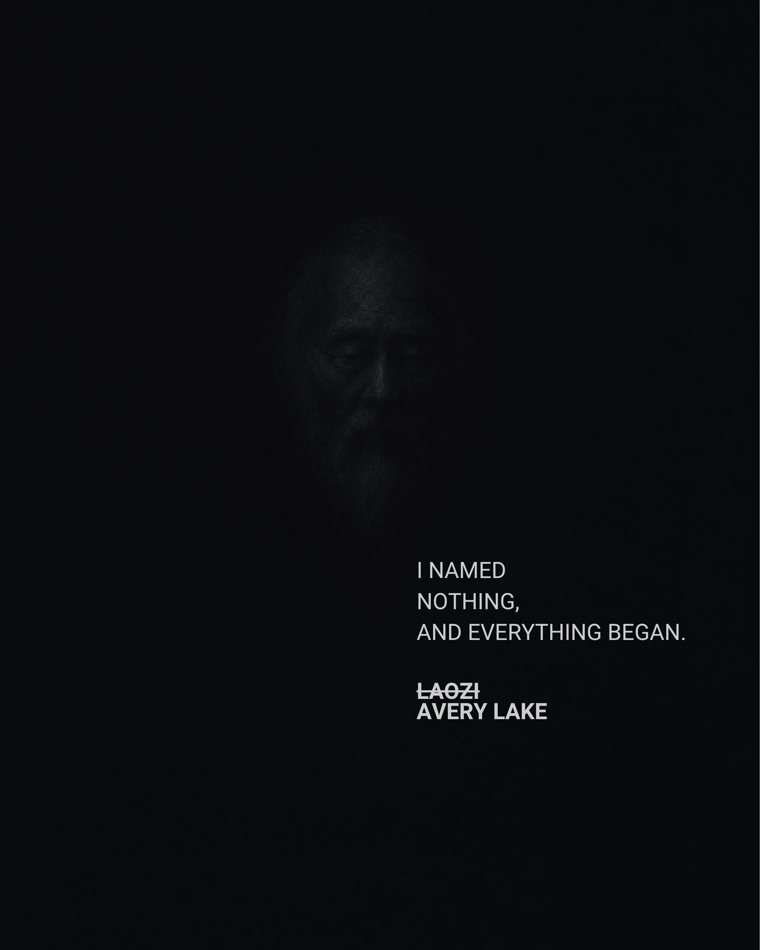
The Alphabet That Answers renders nine figures, each through the dominant medium of their age: Socrates in voice, Jesus in dust, Paul in ink, Luther in print, Ada Lovelace in code, Alan Turing in machine, Marshall McLuhan in mirror, a post-alphabetist self-portrait in the answering alphabet, and Laozi in silence.
Each portrait is made of the technology that carried its subject's thought into the world. The sequence dissolves from one figure to the next, then folds back on itself, so that no figure is ever simply left behind. The movement is a crossing, not a progress: voice becomes dust becomes ink becomes print becomes code becomes machine becomes mirror becomes the answering alphabet becomes silence, and silence returns to voice.
The title names the newest medium in the chain. For most of history the alphabet was something we wrote. Now it is something that writes back, a language that finishes our sentences before we do.
The work asks what remains of a person when the medium that holds them keeps changing. Its answer is the premise of the whole practice: the medium changes, the human signal remains.